What Is AQL Inspection?
AQL Inspection (Acceptable Quality Limit) is a quality inspection method that uses statistical sampling to evaluate whether a lot or batch of products meets predetermined acceptance criteria.
During an AQL inspection, a specific number of units are selected as samples and inspected according to the agreed checklist and product specifications.
The inspection results are then compared with the applicable Accept Number and Reject Number based on the lot size, inspection level, and selected AQL values.
AQL sampling allows businesses to perform structured quality control without inspecting every unit in a shipment.
AQL Sampling Calculator
AQL Sampling CalcCalculate Sample Size and AQL Accept/Reject Criteriaulator
Use the AQL Sampling Calculator from ForQC Services to help determine sample size and acceptance parameters based on lot size, inspection level, and AQL values.
The calculator can help identify:
- Lot Size – total quantity of products in a shipment or batch.
- Inspection Level – the inspection level selected for sampling.
- Code Letter – the sampling code determined by lot size and inspection level.
- Sample Size – the number of units to be inspected.
- AQL Level – the selected quality acceptance level.
- Accept Number – the maximum number of defects allowed for acceptance.
- Reject Number – the number of defects that results in rejection based on the selected sampling criteria.
How to Use the AQL Calculator
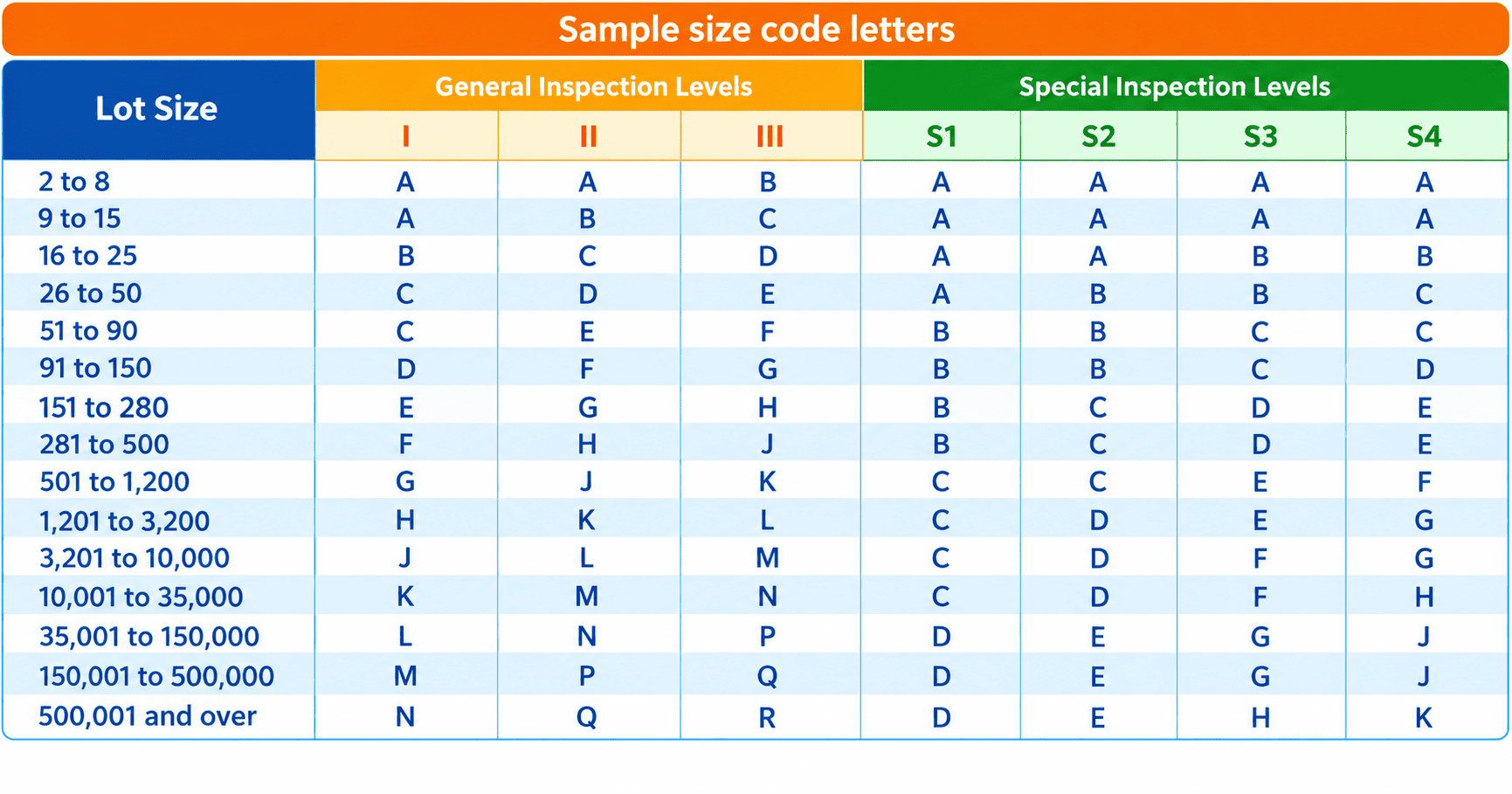
How to Read Table A: Lot Size to Code Letter
The first step in an AQL sampling process is determining the appropriate code letter. The code letter is based on two factors: the total number of units in the lot and the selected inspection level.
Use Table A to locate the applicable lot size, then match it with the chosen inspection level. The resulting code letter is used as the reference for determining the required sample size and acceptance criteria in the next sampling table.
Example: For a shipment containing 4,000 units inspected under General Inspection Level II, the applicable sampling code is Letter L.
Once the code letter has been identified, use it with the selected AQL value to determine the appropriate sample size, Accept Number, and Reject Number.
Reference: The sampling tables shown on this page are based on ANSI/ASQ Z1.4 – 2008.
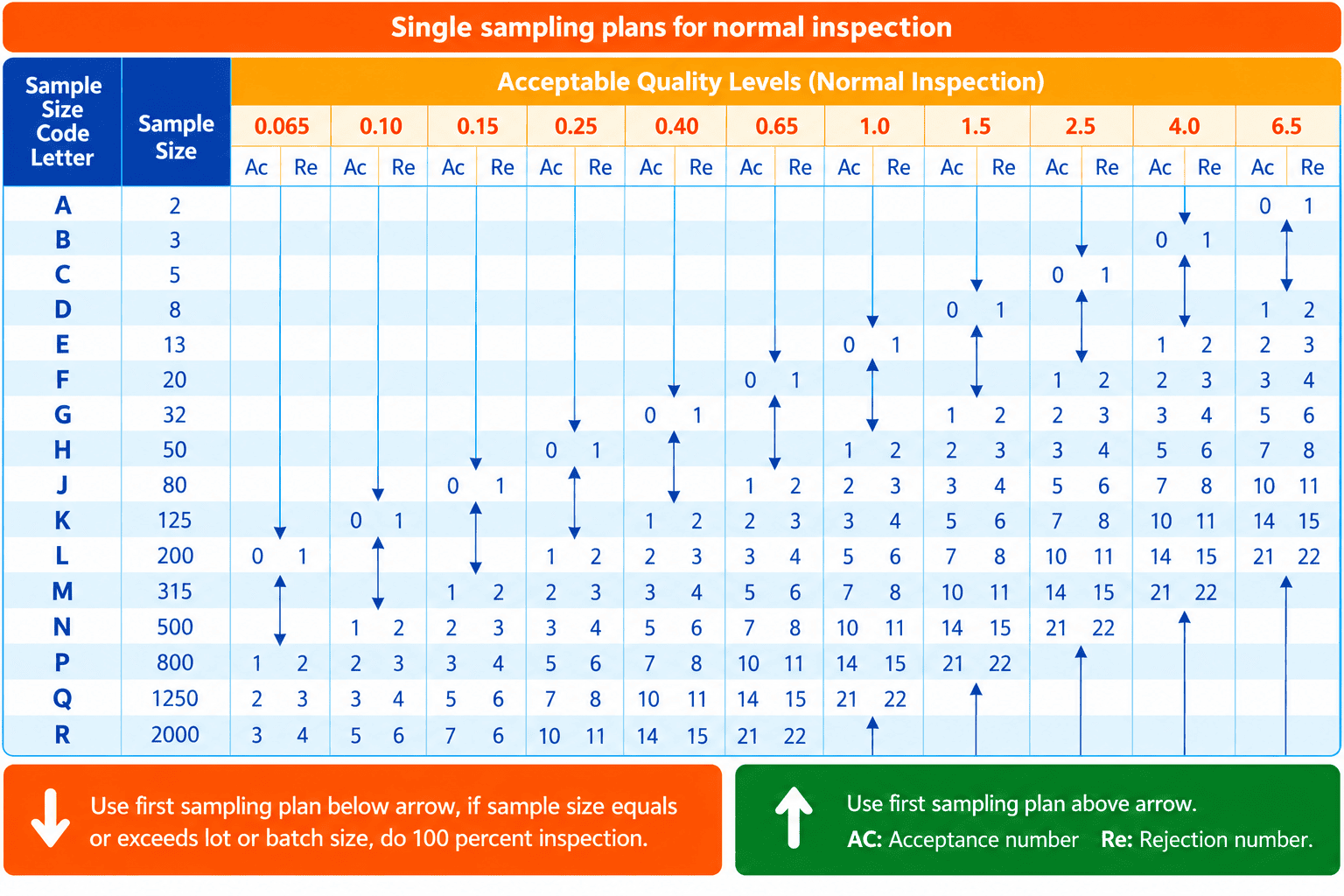
How to Read Table B: Code Letter to Sample Size and Accept/Reject Points
After identifying the appropriate AQL code letter, the next step is to determine the required sample size and the applicable acceptance criteria.
Use the code letter together with your selected AQL value in the sampling table. The corresponding result indicates the number of units that should be inspected, along with the maximum number of defects allowed for the lot to be accepted.
Example: For Code Letter L with an AQL of 2.5, the required sample size is 200 units.
If the inspection identifies 10 or fewer defective units, the lot meets the specified acceptance criteria. If 11 or more defective units are found, the lot does not meet the acceptance criteria and is rejected according to the selected sampling parameters.
This process provides a clear and consistent basis for evaluating whether a production lot meets the defined quality requirements.
AQL Sampling Calculator
Why Is AQL Inspection Important?
Quality problems discovered after shipment can result in additional costs, delays, returns, customer complaints, and supplier disputes.
Conducting an AQL Inspection before shipment helps businesses obtain an objective view of product quality before goods leave the supplier.
Frequently Asked Questions

 AQL: ANSI/ASQ Z1.4 Standard
 ISO 9001:2015 – CQI | IRCA Trained
 HACCP: SGS Academy Trained